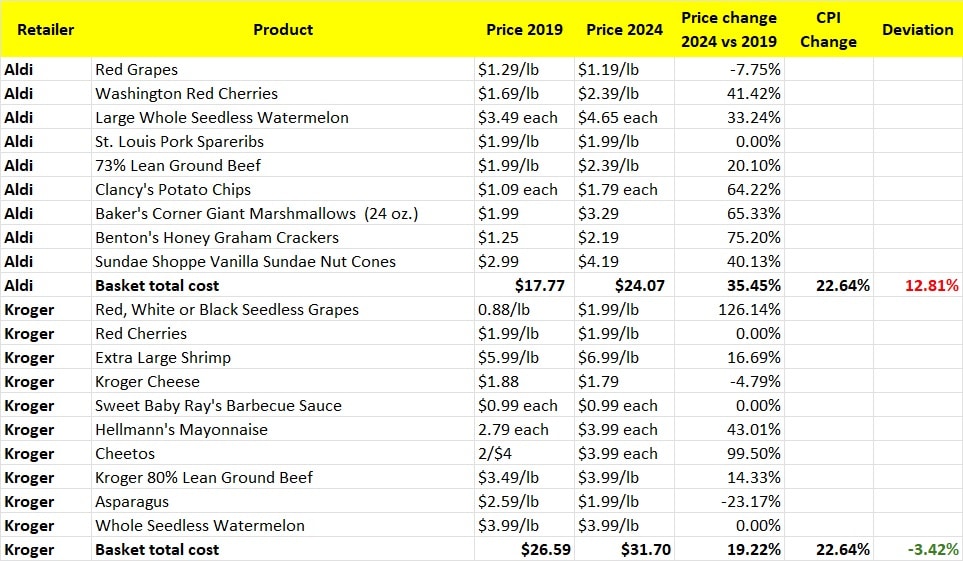
As we approach the 4th of July, we conducted a comparative analysis to understand the price changes for basic products at two of the most popular U.S. retailers: Aldi and Kroger. We examined weekly advertisements from both retailers for the week preceding the 4th of July, comparing identical products listed in both 2019 and 2024 with equal quantities.
Methodology
- Data Collection: We gathered data from the weekly ads of Aldi and Kroger for the week before the 4th of July in 2019 and 2024.
- Product Selection: We included only those products that were listed in both years with identical quantities.
- Price Comparison: We compared the prices of these products between the two years.
- Overall CPI Increase:
- From June 2019 to May 2024, the CPI for all urban consumers (CPI-U) increased by approximately 22.64%. This reflects the overall increase in the cost of living over this period.
- 2019: The CPI in June 2019 was around 256.092
- 2024: By May 2024, the CPI had risen to approximately 314.069.
Findings
Aldi Sees Significant Price Increases While Kroger’s Prices Remain Below CPI
- Aldi: Between 2019 and 2024, Aldi experienced a substantial price increase of 35.45%, significantly outpacing the Consumer Price Index (CPI) rise of 22.64% for the same period. The higher price hikes at Aldi suggest that shoppers may feel a greater pinch at this retailer, particularly during high-demand weeks such as the one leading up to the 4th of July.
- Kroger: Kroger, on the other hand, managed to keep its price increases more in line with the CPI, showing a 19.22% increase. Kroger’s lower overall price increase can be attributed to its aggressive discounting strategy, where many products are offered at reduced prices when using digital coupons and the Kroger Card. This approach has helped Kroger mitigate the impact of inflation, making it a more attractive option for cost-conscious shoppers during peak shopping periods like the 4th of July week.
Note: It’s important to note that this analysis is based on a limited sample of only 9 products (Aldi) and 10 products (Kroger) per retailer, which could mean significant variations in the broader market.
Additional Insights
- At Kroger, both in 2019 and even more so in 2024, the majority of basic products are discounted if you use a Kroger loyalty card and digital coupons. This highlights the importance of leveraging these discounts to manage grocery expenses effectively.
- Sampling Limitations: The sample size of products is small but can serve as a reference point. When comparing these findings to the Consumer Price Index (CPI), which indicates a 22.64% increase from May 2019 to May 2024, it provides a broader context for understanding the changes in grocery prices.
Additional Product Trends from 2019 to 2024 for Aldi and Kroger
Beyond the specific price comparisons for select products, several broader trends can be observed in the grocery retail market over this period. Here are some notable trends:
- Increased Demand for Organic and Health-Conscious Products
-
- Both Aldi and Kroger have expanded their organic and health-conscious product lines significantly. There is a growing consumer preference for organic, non-GMO, and minimally processed foods.
- Aldi’s Simply Nature and Kroger’s Simple Truth brands have seen increased shelf space and promotional efforts.
- Shift Towards Private Label Brands
-
- Private label brands have gained more prominence due to their competitive pricing compared to national brands. Aldi has been a leader in this area with its extensive range of in-house brands, and Kroger has followed suit with its own private labels.
- These brands often offer comparable quality at a lower price point, attracting budget-conscious consumers.
- Inflation and Price Sensitivity
-
- The period from 2019 to 2024 has seen noticeable inflation, impacting the prices of many staple items. Consumers have become more price-sensitive, looking for deals, discounts, and promotions.
- Loyalty programs and digital coupons, like those offered by Kroger, have become increasingly important tools for consumers to manage their grocery bills.
Supporting data: